Septic systems

In rural areas, individual sewage disposal, or septic systems, use natural treatment and filtration to clean waste water before it is dispersed underground. When septic systems work properly they are efficient, inexpensive to maintain and environmentally friendly. When they fail, they cause serious health risks, odours and pollution. Neglect or improper use of a septic system can also cause damage that can be very difficult and expensive to repair.

By properly maintaining sewage disposal systems, homeowners play a significant role in protecting health and natural resources.

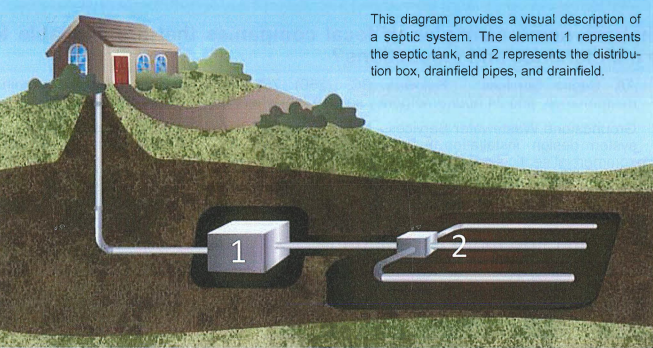
This diagram shows a septic system. Element 1 represents the septic tank, and 2 represents the distribution box, drainfield pipes and drainfield.

For more information on septic systems, including the approval process, approved designers and installation companies and the care and maintenance of systems, please follow this link to the Interior Health onsite sewage systems webpage.

Recommended septic tank capacity

  • 1-2 bedroom house = 750 gallons
  • 3 bedroom house = 1000 gallons
  • 4 bedroom house = 1200 gallons

Size and dimensions

The average septic tank requires a space about 10 ft. by 10 ft. The disposal (or drain) field should be 30 ft. by 50 ft. or larger, with an additional area of similar size held in reserve in case of drain field failure. The drain field must have 4 ft. of good native soil from the surface to the water table or hardpan and a minimum of 2 ft. vertical separation from trench bottom to the water table or impervious material such as hardpan.

Keep your septic system safe by regulating what goes down the drain and doing regular inspections. Ensure proper maintenance by:

  • Only flush toilet paper and wastewater.
  • Do not put anything down the drain or in the toilet that should go in the garbage.
  • Dispose of cooking fats in the garbage or use a grease interceptor.
  • Use household cleaners in moderation (unless all-natural).
  • Do not drive on or park vehicles on top of the septic field as these heavy objects may compact soil and crush pipes.
  • Get your septic system pumped and fully inspected every 3-5 years.

Do:

  • Have your tank pumped every 3-5 years.
  • Know where your system is located. Keep a photo or a map as well as maintenance records.
  • Be safety conscious when checking your system - watch for heavy tank covers, sewer gases and raw sewage.
  • Practice water conservation by using low flush toilets, water saving faucets and shower heads.
  • Only do full loads of laundry.
  • Only do full loads of dishes in the dishwasher.
  • Take hazardous waste to approved disposal centres.
  • Plant grass on your drain field rather than trees or shrubs - water sparingly.
  • Divert roof, patio and driveway runoff away from the drain field.
  • Keep sump pumps, hillside runoff and foundation drains away from the system.
  • Protect the reserve drain field area.
  • Ensure that your system is large enough for your needs.
  • Contact your local health agency for permits for repairs, improvements, installations and more information

Don't:

  • Put non-biodegradable items down the drain (e.g. grease, cigarettes, diapers, cat litter, coffee grounds).
  • Use excessive amounts of cleaning products, bleach or solvents.
  • Harmful chemicals don't belong down your drain (e.g. paint, kerosene, antifreeze, gas, oil, herbicides, pesticides). These can leach into groundwater and poison the environment.
  • Stress the system with multiple loads of laundry on one day.
  • Discharge water softening devices into the system.
  • Vehicles should not be stored or driven on your drain field.
  • Don't build outbuildings, patios or pools on your drain field as these can compact the soil, crush pipes and reduce aerobic action in the drain field.
  • Don't saturate your drain field with automatic water sprinkling
  • Garburators put extra pressure on the system.

Lack of maintenance is the number one reason septic systems fail. Failing septic systems cause serious problems such as contaminating groundwater, streams, rivers and lakes – all of which impacts the quality of our drinking water. When septic systems fail, untreated or partially treated wastewater can be exposed, which carries dangerous viruses and pathogens, resulting in illness and pollution in our community.

Signs of a failing septic system:

  • Slow or backed up drains.
  • Patches of lush growth over the drain field.
  • Unpleasant odours around the yard.
  • Sewage surfacing on lawns or in ditches.

Waste from your septic tank is to be hauled for treatment to the regional septic receiving facility located off Beaver Lake Road in Lake Country by a licensed commercial hauler only.

The Septic Tank Effluent Regulation | Bylaw No.1479, requires all commercial haulers must have a valid permit to use this facility. Permits can be requested through our online service request system.

Please note:

  • Current disposal rates and charges are set out in Bylaw No. 1479
  • Only septic tank effluent from within the Regional District of Central Okanagan is accepted at the facility.

RDCO bylaws (Westside Sewer System | Bylaw No. 1315 and East Sewer Systems | Bylaw No. 1316) prohibit the disposal of any sludge, deposit, or material contained in, or originating from, any septic tanks, portable holding tanks, or recreational vehicles into the regional sewer system.