Mosquito control
The Regional Nuisance Mosquito Control Program provides effective management of the insects through control of mosquito larvae. Beyond the negative impacts of mosquitos on Okanagan lifestyle, the program also helps reduce the potential risk of West Nile virus or other mosquito transmitted diseases. The program is designed to control mosquitos, not eliminate them.
The Regional District administers this ongoing program on public lands in:
- Central Okanagan East Electoral Area
- City of Kelowna
- District of Lake Country
- District of Peachland
- Westbank First Nation
- A small area of West Kelowna Estates in the City of West Kelowna
Report a problem area
Duka Environmental Services administer the program. Please contact them to report a nuisance mosquito area:
How residents can help
Reduce standing water
Mosquitoes rely on stagnant water to develop. Property owners can help by:
- Draining or emptying containers (buckets, tarps, tires, plant pots)
- Refreshing bird baths weekly
- Covering rain barrels with screens
- Storing unused items upside down or under covered areas
- Maintaining pools and removing water from covers
- Using pumps or aerators in decorative ponds to keep water moving
- Seasonal or vacant properties should be checked regularly to prevent water from collecting
Manage yard and outdoor spaces
Areas with dense vegetation and nearby wetlands can attract mosquitoes. To reduce activity:
- Trim vegetation near patios and homes
- Improve air circulation to reduce humidity
- Use repellents, citronella products or mosquito traps
Store tires properly
Spare tires are ideal mosquito habitats. Store them under cover or recycle them through local collection programs. See Tire Stewardship BC to find where you can recycle tires.
Support natural predators
While not a complete solution, encouraging natural predators can help:
- Install bird and bat houses
- Create landscapes that attract dragonflies and other beneficial insects
About the program
The annual mosquito control program focuses on identifying and treating standing water habitats where mosquito larvae develop. These include shallow, stagnant water sources such as ponds, marshes, swamps and temporary depressions. Larger or deeper water bodies (over 30 cm), those with water movement, or those exposed to wind are generally less suitable for mosquito larval development.
The control program has a database of over 200 site locations. From April through September, staff regularly (every six to ten days) inspect those sites and apply treatment, as required, with an environmentally friendly and target-specific, bacterial larvicide to control developing larval populations.
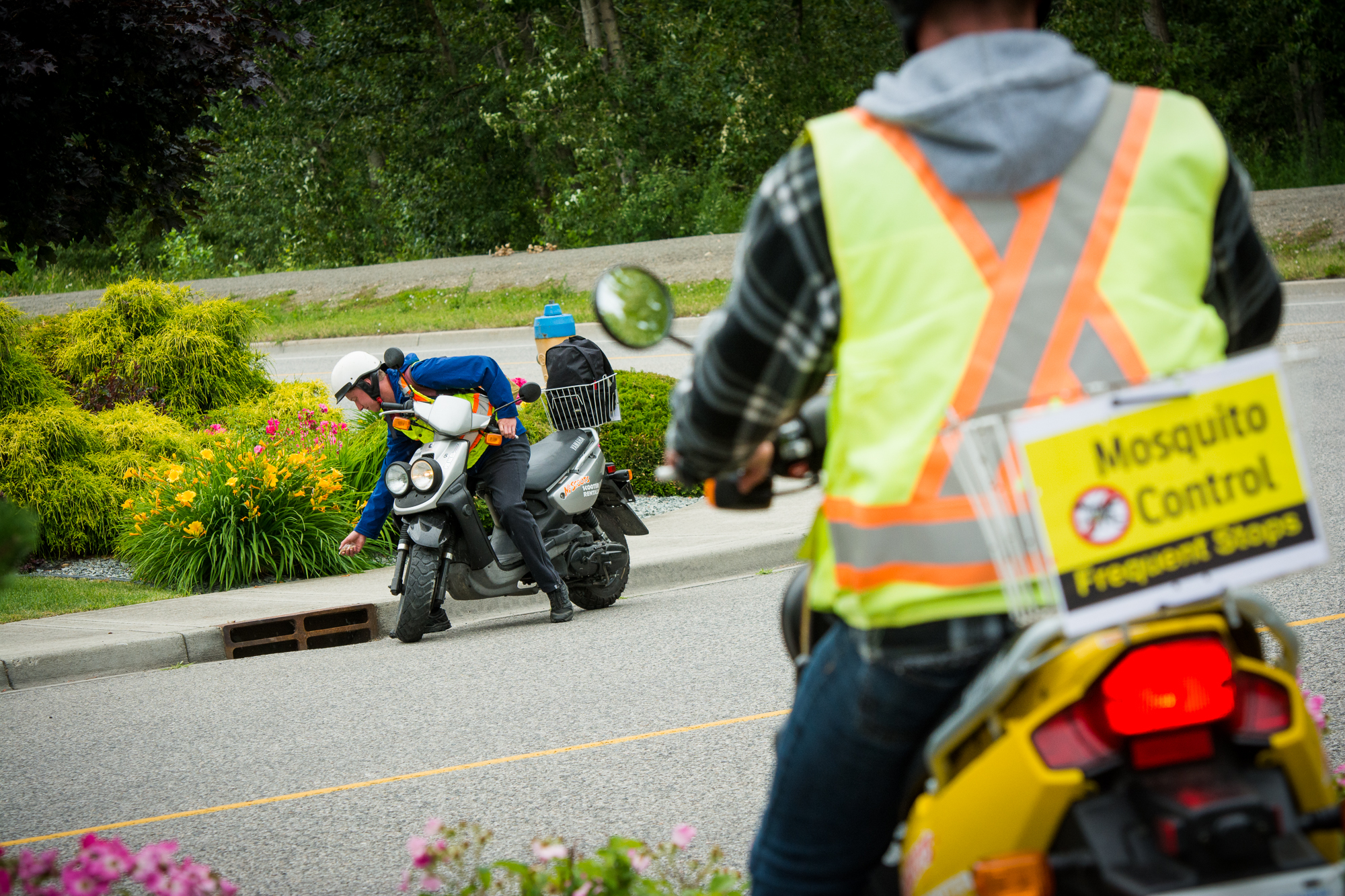
During late June and July, the program also controls larval development by monitoring, and if necessary treating, approximately 12,000 roadside catch basins located along public roadways and residential streets. These are treated by technicians using scooters.


